
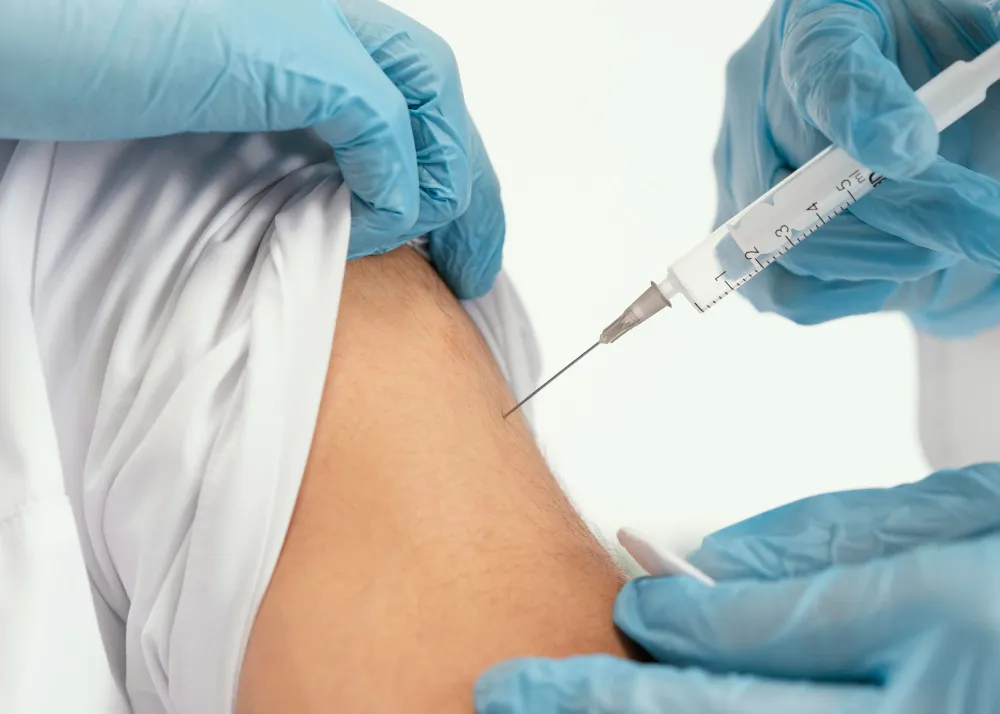
If you're dealing with neck pain, back pain, sciatica, or nerve-related arm or leg pain, you may have been told that an epidural steroid injection (ESI) could help. These injections are widely used in modern spine care—but they're often misunderstood.
This article explains what epidural steroid injections are, when they help, when they don't, and answers the most common questions patients ask before deciding whether to move forward.
Our clinic is located in Payson, and we regularly treat patients from Provo, Springville, Mapleton, Salem, Santaquin, and Nephi seeking evidence-based spine and pain care.
What Is an Epidural Steroid Injection?
An epidural steroid injection delivers a corticosteroid (anti-inflammatory medication), often combined with a local anesthetic, into the epidural space surrounding the spinal nerves. The purpose is to reduce nerve inflammation, decrease pain signaling, and improve mobility so rehabilitation and healing can occur.
These injections are most effective when pain is driven by inflammation of a spinal nerve, such as disc herniation, pinched nerve, foraminal stenosis, or spinal stenosis with radiculopathy. They are not surgery and do not permanently alter the spine.
The Two Most Common Types of Epidural Steroid Injections
Interlaminar Epidural Steroid Injection
An interlaminar epidural injection places medication into the central epidural space, allowing it to spread across multiple nerve roots. This approach is commonly used when pain is bilateral or diffuse, or when central disc bulging or spinal stenosis is present.
Transforaminal Epidural Steroid Injection (TFESI)
A transforaminal epidural steroid injection is a targeted technique that places medication directly next to a specific nerve root as it exits the spine. This approach is often preferred for sciatica, foraminal stenosis, and nerve pain caused by a focal disc herniation.
Where Can Epidural Steroid Injections Be Performed?
Epidural steroid injections can be performed in different regions of the spine depending on symptoms and imaging findings:
- Cervical spine (neck): neck and arm pain
- Thoracic spine (mid-back): band-like chest or rib pain
- Lumbar spine (low back): sciatica, leg pain, spinal stenosis
- Sacral region (caudal epidural): broad lumbar symptoms or post-surgical anatomy
Frequently Asked Questions
Is this just a band-aid?
Sometimes. Epidural injections do not fix degenerative changes but can calm inflammation, improve mobility, and allow physical therapy to work. Used strategically, they may help prevent pain from becoming chronic.
Is this going to help me heal?
Indirectly, yes. By reducing inflammation, epidural injections create an environment where muscles relax, nerves fire less, and rehabilitation becomes effective.
Will this block my pain so I won't know if I'm injuring myself?
No. These injections reduce inflammation but do not remove protective pain signals or numb the spine long-term.
Are steroids bad for me?
When used appropriately, epidural steroids are considered safe for most patients. The dose is low, delivered locally, and spaced out. Temporary side effects may include flushing, mild insomnia, or short-term blood sugar elevation.
How many epidural steroid injections can I have in a year?
Most guidelines recommend no more than three to four epidural injections per spinal region per year.
Do I need sedation?
Usually not. Most patients tolerate epidural injections well with local anesthetic alone.
Is it going to hurt?
Most patients describe pressure and brief discomfort, often less than expected.
How long does it take to work?
Local anesthetic relief may occur within hours. Steroid benefit typically begins within two to five days and peaks by one to two weeks.
What if it doesn't help?
If relief is minimal or short-lived, the diagnosis is reassessed and treatment shifts toward rehabilitation or alternative strategies.
Why Fluoroscopy Matters
All epidural steroid injections should be performed using live fluoroscopic (X-ray) guidance to confirm accurate needle placement and improve safety and outcomes.
Final Thoughts
Epidural steroid injections are a tool—not a cure. When used thoughtfully, they can reduce pain, improve function, speed recovery, and help avoid surgery.
Ready to Take the Next Step?
If you're experiencing neck pain, back pain, or sciatica and want an evidence-based opinion on whether an epidural steroid injection or another treatment is appropriate, we're happy to help.
- 📞 CALL NOW: 385-298-1008
- 💬 TEXT US: Fast, convenient communication
- 📍 Serving Provo, Springville, Mapleton, Salem, Payson, Santaquin, and Nephi
References
- Chou R, et al. Ann Intern Med.
- Pinto RZ, et al. Cochrane Database Syst Rev.
- Manchikanti L, et al. Pain Physician.
- North American Spine Society (NASS).
- FDA Drug Safety Communication.
- CMS Local Coverage Determination.
- American Society of Interventional Pain Physicians.
- American Society of Anesthesiologists.