

A motor vehicle accident can change your life in an instant.
One moment you're driving to work, taking your kids to school, heading to the gym, or running errands. The next moment, you're dealing with neck pain, back pain, headaches, numbness, tingling, anxiety, difficulty sleeping, and wondering if you'll ever feel like yourself again.
At Horizon Spine & Pain, we understand that car accidents affect much more than the spine. They affect families, careers, hobbies, sleep, mental health, and quality of life. Over the years, our team has cared for hundreds of patients recovering from motor vehicle accidents. Some improve quickly. Others face months or years of challenges before finding answers.
Many patients arrive feeling frustrated because they have been told their MRI looks fine despite experiencing severe pain. Others have seen multiple providers but still don't fully understand why they hurt.
Our philosophy is simple:
The better the diagnosis, the better the treatment.
Rather than focusing solely on where the pain is located, we focus on identifying what structure is causing the pain and what evidence-based treatments are most likely to help.
Why Motor Vehicle Accidents Cause So Many Different Types of Pain
Most people think of whiplash as a neck injury. In reality, motor vehicle accidents can injure almost any structure involved in movement and stability.
Depending on the accident, patients may develop:
- Neck pain and whiplash injuries
- Headaches and migraines
- Low back pain and sciatica
- Herniated discs
- Pinched nerves
- Sacroiliac joint injuries
- Shoulder injuries
- Hip pain
- Muscle and ligament injuries
- Chronic nerve pain
- Post-traumatic stress symptoms
- Sleep disturbances
- Chronic pain syndromes
It is also common for multiple injuries to occur simultaneously.
A patient may have a cervical facet injury causing headaches, a lumbar disc injury causing sciatica, and an SI joint injury causing buttock pain—all from the same collision.
This is why accurate diagnosis is so important.
Headaches After a Car Accident: One of the Most Common Problems We See
Headaches are among the most common and disabling symptoms following a motor vehicle accident.
Many patients develop daily headaches that begin at the base of the skull and travel into the back of the head, temples, forehead, or behind the eyes. Some are told they have migraines when the actual source of pain originates in the upper cervical spine.
Research has shown that cervical facet joints are one of the most common pain generators following whiplash injuries.
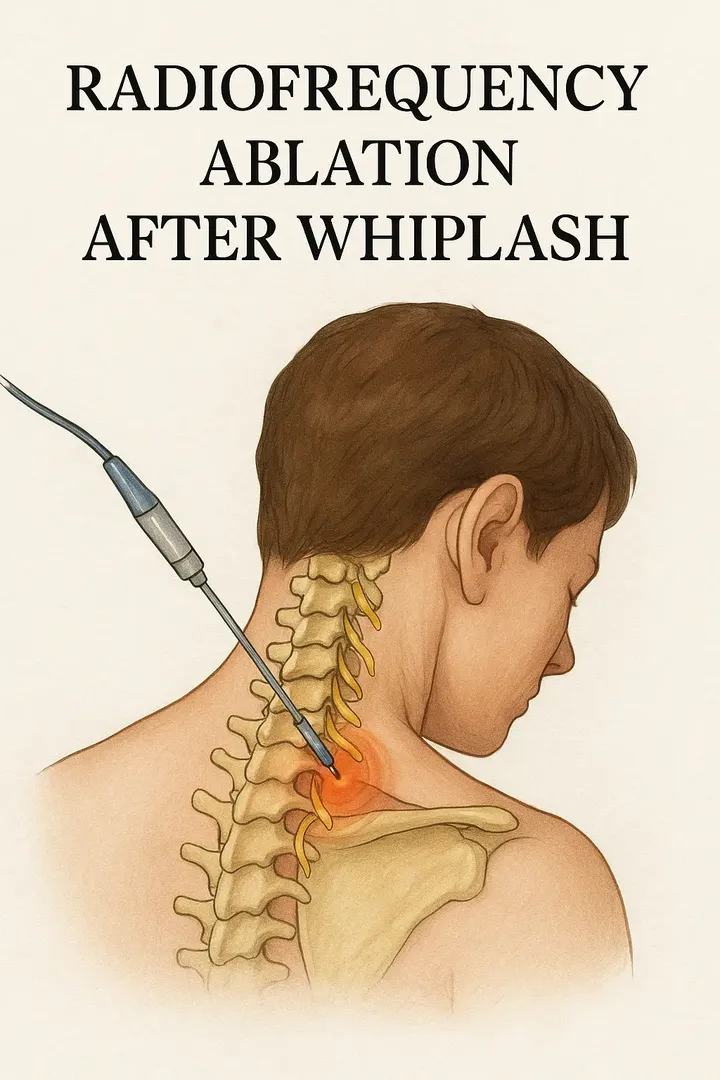
At Horizon Spine & Pain, we frequently evaluate patients for occipital neuralgia, cervicogenic headaches, and upper cervical facet pain. Depending on the diagnosis, treatment may include occipital nerve blocks, third occipital nerve blocks, cervical medial branch blocks, and radiofrequency ablation.
Among all treatments used after motor vehicle accidents, radiofrequency ablation for confirmed cervical facet pain has some of the strongest supporting evidence. Studies have demonstrated meaningful pain reduction and long-lasting relief in carefully selected patients, particularly when diagnostic medial branch blocks first confirm the facet joints as the source of pain.
In other words, the procedure works best when the diagnosis is correct.
Neck Pain, Back Pain, and Epidural Steroid Injections
Disc injuries and nerve irritation are also extremely common following motor vehicle accidents.
When a disc herniation or inflamed nerve develops, patients may experience neck pain, arm pain, numbness, tingling, weakness, low back pain, or sciatica extending into the leg.
Epidural steroid injections remain one of the most extensively studied procedures in interventional pain medicine. Large systematic reviews have demonstrated meaningful improvements in pain and function for cervical and lumbar radiculopathy.
One patient came to our clinic months after an accident with severe headaches, neck pain, low back pain, and significant anxiety whenever she drove. She had tried multiple treatments but continued struggling with daily activities.
After a thorough evaluation, our team identified several sources contributing to her symptoms and developed a comprehensive treatment plan. Epidural steroid injections helped calm inflammation around injured nerves and significantly improved her pain.
Most importantly, she began participating in life again.
She started driving more comfortably, sleeping better, and returning to activities she had gradually abandoned since the accident.
While every patient's journey is different, stories like hers remind us that recovery is often possible when the right diagnosis meets the right treatment.
Sacroiliac Joint Pain: The Diagnosis Many Patients Miss
One of the most commonly overlooked injuries after a motor vehicle accident involves the sacroiliac joints.
These joints connect the spine to the pelvis and absorb tremendous forces during collisions.
Patients frequently describe pain in the low back, buttocks, groin, hip, or upper thigh. Because the symptoms often resemble disc pain or sciatica, SI joint injuries can go undiagnosed for months.
At Horizon Spine & Pain, we routinely evaluate for SI joint dysfunction and utilize diagnostic injections to determine whether the joint is contributing to symptoms.
Treatment options may include physical therapy, SI joint injections, radiofrequency ablation, regenerative medicine procedures, or minimally invasive SI joint stabilization when appropriate.
Shoulder Pain, Hip Pain, and Soft Tissue Injuries
Not all pain after a car accident comes from the spine.
Seatbelt injuries, impact forces, and protective bracing often lead to shoulder injuries, rotator cuff pathology, hip pain, bursitis, tendon injuries, and muscle strains.
Many patients also develop painful trigger points and chronic muscle tension throughout the neck, shoulders, upper back, low back, and hips.
These conditions frequently respond to a combination of rehabilitation, image-guided injections, trigger point injections, activity modification, and targeted strengthening programs.
The key is identifying the correct pain generator rather than assuming all pain originates from the spine.
Regenerative Medicine and PRP
Some patients continue to struggle despite physical therapy, medications, and traditional injection therapies.
In select situations, regenerative medicine procedures such as platelet-rich plasma (PRP) may be considered.
One patient experienced substantial improvement from epidural steroid injections after her accident, but some symptoms persisted. After carefully reviewing available options, she elected to pursue PRP treatment for ongoing disc-related pain.
Although regenerative medicine continues to evolve and is often not covered by insurance, research supporting certain applications continues to grow. For carefully selected patients, these treatments may play a role within a comprehensive treatment strategy.
Advanced Treatments for Chronic Pain
Most patients improve without requiring advanced interventions.
However, some continue to experience severe pain despite exhausting conservative treatment options.
One of our patients was a mother caring for several children, including a child with special needs. Following her accident, severe nerve pain affected nearly every aspect of her life. She struggled to work, sleep, drive, and care for her family.
Epidural steroid injections provided meaningful relief, but the benefits were temporary.
After extensive discussion and evaluation, she underwent a spinal cord stimulation trial.
The results were life-changing.
She ultimately proceeded with permanent implantation and experienced substantial improvements in pain, activity level, and overall function. More importantly, she was able to return to caring for her family and participating in daily life again.
Modern spinal cord stimulation has strong evidence supporting its use for carefully selected patients with chronic neuropathic pain, complex regional pain syndrome, and persistent pain that has not responded to more conservative treatments.
What Does the Medical Evidence Actually Show?
At Horizon Spine & Pain, we believe treatment recommendations should be driven by science rather than trends.
Current evidence suggests:
- Radiofrequency ablation has some of the strongest evidence for chronic whiplash-related facet pain when diagnostic medial branch blocks confirm the diagnosis.
- Epidural steroid injections have strong evidence supporting their use for cervical and lumbar radiculopathy caused by disc injuries and nerve inflammation.
- Basivertebral nerve ablation (Intracept) has demonstrated durable long-term improvements for carefully selected patients with vertebrogenic low back pain and Modic changes on MRI.
- Spinal cord stimulation remains an important treatment option for select patients with chronic nerve pain and persistent functional limitations.
- Trigger point injections and rehabilitation programs often play an important role in treating the muscle and soft tissue injuries that commonly occur after motor vehicle accidents.
The most effective treatment is rarely the newest treatment or the most aggressive treatment.
The most effective treatment is the one supported by the patient's diagnosis, examination findings, imaging studies, goals, and the best available medical evidence.
A Team Approach to Recovery
Recovery after a motor vehicle accident rarely comes from a single injection or procedure.
At Horizon Spine & Pain, we believe the best outcomes occur when evidence-based medicine, compassionate care, and a collaborative team approach come together around the individual needs of each patient.
Our physicians and staff work closely with chiropractors, physical therapists, primary care physicians, psychologists, orthopedic surgeons, neurosurgeons, and other specialists to coordinate care and optimize outcomes.
- Sometimes the right answer is physical therapy.
- Sometimes it is radiofrequency ablation.
- Sometimes it is an epidural injection.
- Sometimes it is regenerative medicine.
- Sometimes it is surgery.
Most often, it is a thoughtful combination of treatments tailored to the individual patient.
Horizon Spine & Pain
If you're suffering from neck pain, headaches, whiplash, back pain, sciatica, sacroiliac joint pain, shoulder pain, hip pain, nerve pain, or chronic pain after a motor vehicle accident, know that recovery is possible.
Our team is committed to identifying the true source of pain, explaining your options clearly, and developing an evidence-based treatment plan designed around your goals.
Because our mission is about more than pain relief.
It's about helping people get back to work, get back to family, get back to sleep, get back to exercise, and ultimately get back to living the life they want to live.
Pain Relief Is On The Horizon — Driven by Evidence, Delivered with Compassion.
Selected References
- Sayed D, et al. ASPN Evidence-Based Clinical Guideline of Interventional Treatments for Low Back Pain. Journal of Pain Research. 2022.
- Armon C, et al. Epidural Steroids for Cervical and Lumbar Radicular Pain and Spinal Stenosis. Neurology. 2025.
- Manchikanti L, et al. Effectiveness of Radiofrequency Ablation in Managing Chronic Axial Spinal Pain. Pain Physician. 2026.
- van Eerd M, et al. Efficacy and Long-Term Effect of Radiofrequency Denervation in Cervical Facet Joint Pain. Spine. 2021.
- Suer M, et al. Cervical Facet Joint Pain and Cervicogenic Headache Treated With Radiofrequency Ablation. Pain Physician. 2022.
- Sapir DA, Gorup JM. Radiofrequency Neurotomy in Whiplash Patients. Spine. 2001.
- Smuck M, et al. INTRACEPT Trial: Basivertebral Nerve Ablation for Chronic Low Back Pain. Regional Anesthesia and Pain Medicine. 2021.
- Deer TR, et al. Systematic Review of Spine Neurostimulation Therapies. Pain Medicine. 2020.
- Traeger AC, et al. Spinal Cord Stimulation for Low Back Pain. Cochrane Database of Systematic Reviews. 2023.